
MANTLE FASCINATIONS
The upper mantle of our planet stretches between the Moho and the upper limit of transition zone at 410 km. It consists of lithospheric mantle, which is rigid and constitutes the sub-Moho part of lithospheric plates, and of asthenosphere, which is ductile and convecting. Fragments of lithospheric mantle – xenoliths in alkaline volcanic rocks, orogenic peridotites, and ophiolites – transported to the surface by various mechanisms – provide direct rock samples that can be studied by methods used in Earth sciences.
Large part of my professional career was focused on of mantle xenolith research. Before, I worked with igneous and metamorphic rocks forming the Polish part of the European Variscides, including a two-years episode in experimental petrology of granitic systems. It is therefore perhaps not surprising that my major fascination in recent years has been how the evolution of the mantle root of the Variscan orogen relates to that of the overlying crust.
This session on the occasion my 70th birthday is organized by the Petrology Group of the Polish Mineralogical Society, to which I am deeply grateful. I started my professional career in Earth sciences in 1981, and during last 45 years I was lucky to meet many fantastic scientists, all good and wise people, and many brilliant students, who now are professionals conducting high-quality research. Some of these colleagues cooperated with me in recent years in xenolith studies. They generously accepted my invitation to this session, which is open to all mantle researchers wishing to showcase and discuss their data, ideas and mantle fascinations. Welcome!
Jacek Puziewicz
Honorary Member of the Mineralogical Society of Poland
The invited talks for this anniversary session:
- Jacek Puziewicz - Mantle root of the European Variscides – the xenolith story
- Sonja Aulbach - Volatiles in the Variscan orogenic cycle as told by orogenic peridotites and mantle xenoliths
- Stanisław Mazur - Tectonic architecture and lithospheric inheritance of the European Variscan Belt
- Theodoros Ntaflos - Constraints on the evolution of the lithospheric mantle underneath Patagonia, Argentina
- Károly Hidas & José Alberto Padrón-Navarta: Hydrous phases, fluids and melts as controls on upper mantle deformation: insights from peridotite microstructures
- Mary-Alix Kaczmarek - From ocean-continent transition to transform faults: The relationships between deformation and melt percolation
Keynote speakers
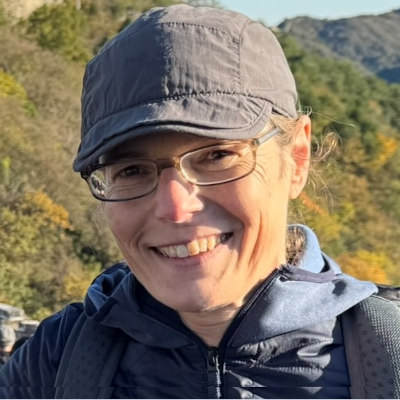
Sonja Aulbach
Sonja Aulbach’s main research interests lie in the origin, modification, and destruction of the continental lithosphere. She studies these processes within the context of the physicochemical evolution of terrestrial reservoirs, volatile cycling, and geodynamics through time—forces that have shaped our planet and made it unique in the solar system. While much of her research has focused on the cratonic lithospheric mantle using kimberlite-borne xenoliths and xenocrysts (which - brilliantly - include diamonds), her interest in crust-mantle interaction and off-cratonic lithosphere evolution closer to home was inspired by her work with Professor Jacek Puziewicz and his talented team of current and former students. Her presentation on volatiles in the Variscan orogenic cycle, as revealed by orogenic peridotites and mantle xenoliths, is the fruit of this highly rewarding collaboration.
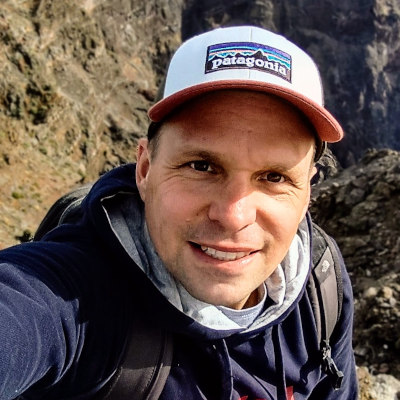
Károly Hidas
Károly Hidas is a petrologist whose research focuses on the microstructural evolution of mantle rocks and the role of fluids and melts in controlling deformation, recrystallization and annealing processes in the lithospheric mantle. More recently, he has expanded his research to natural hydrogen systems associated with mantle-derived rocks, investigating the geological controls on hydrogen generation and migration. His work combines detailed petrographic and microstructural analysis with mineral chemistry, whole-rock geochemistry and field-based structural observations. His presentation will explore how hydrous phases, fluids, and melts influence deformation in the upper mantle, highlighting how microstructural records preserved in peridotites provide unique insights into the evolution of the lithospheric mantle.
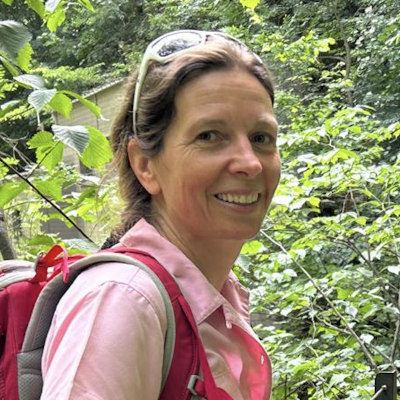
Mary-Alix Kaczmarek
Mary-Alix Kaczmarek is a geologist who specialises in the pretrology, microstructure and geochemistry of the ultramafic rocks. She primarly focuses on the oceanic crust and the subcontinental mantle, as well as the achondrite meteorites originating from Mars and other asteroidal bodies. She is interesting by exploring the relationships between magmatic processes, reactive fluid/melt transport, deformation mechanisms and geochemical variations.
The planned keynote will provide an overview of the relationships between mantle rock deformation and melt-rock reactions during the formation of the oceanic crust. This will be illustrated by examples ranging from the Alps' ocean-continent transition to an active transform fault and their associated oceanic core complexes which where studied using a scientific submarine in the Atlantic.
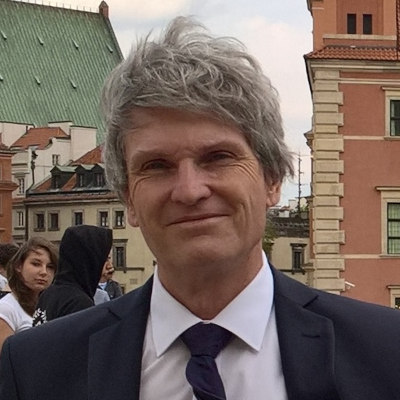
Stanisław Mazur
Professor Stanisław Mazur is director of the Institute of Geological Sciences, Polish Academy of Sciences, and a Fellow of the Polish Academy of Sciences. His research spans tectonics, structural geology, basin analysis and applied geophysics, combining academic work with 11 years of technical leadership in British geophysical consulting companies Getech and ARKeX. He obtained his PhD in structural geology from the University of Wrocław, trained at University College Dublin, completed a postdoctoral fellowship at GFZ Potsdam, and held visiting fellowships at the University of Leeds. Since 2018, he has led the Group for the Integration of Geological and Geophysical Data (GRID) in Kraków. His presentation, “Tectonic Architecture and Lithospheric Inheritance of the European Variscan Belt,” examines how inherited cratonic and transitional lithosphere shaped the construction, geometry and internal differentiation of the Variscan orogen during Laurussia–Gondwana convergence. It highlights the contrasting roles of rigid cratonic indenters and mechanically weakened Gondwana-derived ribbons in controlling deformation, metamorphism, and magmatism during Pangaea assembly.
Theodoros Ntaflos
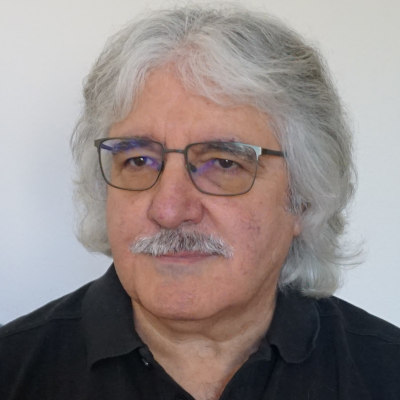
Theodoros Ntaflos is a retired professor and currently a lecturer at Department of Lithospheric Research, University of Vienna. His primary research interest is the evolution of the Earth's lithospheric mantle, with a particular focus on its stabilization following melt extraction during the formation of the Earth's crust, as well as the metasomatic and refertilization processes that subsequently modify the lithosphere. His petrological and geochemical studies of mantle xenoliths, brought to the surface by basaltic lavas from both cratonic and non-cratonic regions, provide valuable insights into the physical and chemical conditions of the otherwise inaccessible Earth's mantle. Mantle xenoliths from Patagonia, Siberia, and the Pannonian Basin have been central to his research throughout his career. More recently, his work has focused on the significance of trace elements in olivine, the dominant mineral of the lithospheric mantle. By applying state-of-the-art analytical techniques for the high-precision determination of trace element concentrations in olivine, his research has contributed to a better understanding of the geochemical processes operating within the Earth's Mantle. In his talk, he will present an overview of the evolution of the lithospheric mantle beneath Patagonia, based on petrological and geochemical studies of mantle xenoliths.
Jacek Puziewicz
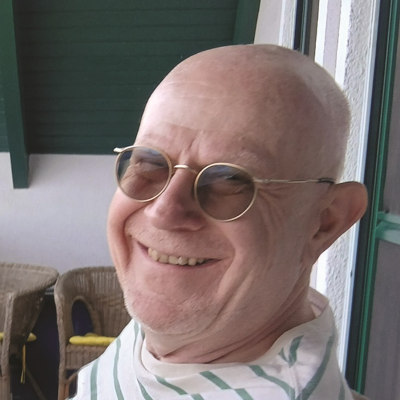
Professor Jacek Puziewicz, a senior Polish petrologist, started his research career in Wrocław, studying granitic and metamorphic rocks of the Sudetic part of the Bohemian Massif under the supervision of Alfred Majerowicz. Subsequently, he worked on phase equilibria in granitic systems in the experimental petrology laboratory of Wilhelm Johannes in Hannover. In 1994 Jacek Puziewicz initiated the annual meetings of the Petrology Group of the Mineralogical Society of Poland, which became a major conference in Earth Sciences in Poland.
Since 20 years Professor Puziewicz is fascinated by the structure and dynamics of subcontinental Earth’s upper mantle, which he studies integrating petrological, geochemical and geophysical approach. Mantle xenoliths brought to the surface by alkaline lavas are the research material. Through a series of projects accomplished with coworkers and students, Jacek Puziewicz characterized lithospheric mantle beneath the Variscan orogen of Europe and beneath the Cameroon Volcanic Line in Africa. The new model of the architecture of mantle underlying European Variscides will be the topic of his presentation.