About the Conference
The 31st Meeting of the Petrology Group of the Mineralogical Society of Poland - PTMin 2026 will be held under the theme “Rhyolite – Rock of the Year 2026”.
This meeting embraces the idea of designating a “rock of the year” as an opportunity to highlight rhyolite—a rock of exceptional scientific and societal significance. Rhyolite is fascinating from multiple perspectives: it is associated with climatically impactful eruptions, hosts important mineral resources, and preserves key records of magmatic processes involved in the evolution of continental crust. Moreover, rhyolitic supereruptions capture the imagination and provide a powerful gateway for public engagement with Earth sciences.
The conference aims not only to promote high-quality scientific exchange but also to strengthen outreach efforts through collaboration with the UNESCO Geopark of Extinct Volcanoes (The Kaczawskie Mountains and Foothills), bringing petrology closer to a broader audience.
This celebration of Rhyolite – Rock of the Year 2026 provides an opportunity to bring together scientists working on silicic rocks across Central Europe. We would like to invite all those particularly interested in this topic to the pre-conference Rhyolitic Group Meeting, dedicated to enhancing, establishing new, and strengthening existing cooperation in this field of research.
Traditionally, the main Petrology Group PTMin meeting will serve as a platform for mineralogists and petrologists to come together, exchange ideas, and foster collaboration during thematic and general sessions. The conference will also provide a special opportunity to honor the contributions of Professor Jacek Puziewicz, founder of the Petrology Group. To celebrate his scientific legacy, a dedicated session on mantle evolution – his primary field of research – will be held.
Organised by:
- Mineralogical Society of Poland
- University of Wrocław, Institute of Geological Sciences
- Polish Geological Institute ‒ National Research Institute
Venue
Located in the Kaczawa Valley, the Palace in Krotoszyce is a historic 17th-century estate set within a six-hectare landscaped park and accompanied by preserved farm buildings. Its advantageous location—near Legnica, with direct access to the A4 motorway and S3 expressway, and within convenient reach of Wrocław, Prague, and Berlin—ensures accessibility for both national and international participants.
Constructed circa 1600 as a fortified residence with a moat, the palace underwent successive architectural transformations, culminating in a Neo-Baroque form while retaining its original structural character. Despite later renovations, the site preserves its historical integrity. The venue combines cultural heritage with a calm and focused environment, offering an appropriate setting for academic exchange, while also providing access to the distinctive landscape of the Kaczawa Foothills and Mountains.
Notably, the region forms part of the Land of Extinct Volcanoes Geopark, an area of significant geological interest. This unique setting – characterized by remnants of ancient volcanic activity – makes the location particularly relevant and inspiring for conferences addressing rhyolite as the Rock of the Year 2026.
The Krotoszyce Palace
ul. Parkowa 3
59-223 Krotoszyce
Registration & Important Dates
Important dates:- Opening Registration – 4th May 2026
- Deadline for Early Registration – 15th June 2026
- Deadline for Registration – 1st September 2026
- Deadline for Abstract – 2nd September 2026
- The Second Circular – 6th October 2026
Registration information:
The registration fee provides full participation in the conference, including conference materials, accommodation, breakfasts, lunches, coffee breaks, evening social events.
| Early Registration Fee Received until 15th June 2026 |
Regular Registration Fee Received after 15th June 2026 |
Post-conference field trip | Pre-conference Rhyolitic Group Meeting | |
| PTMin member full fee | 1750 PLN | 1850 PLN | 100 PLN | 300 PLN |
| PTMin non-member full fee | 1850 PLN | 1950 PLN | ||
| Student/PhD student fee (triple room) | 1500 PLN | 1600 PLN |
* Single room – 400 PLN extra.
** Please note that we do not offer lower fees in case of a shorter day.
*** The bank account number will be included in the registration confirmation.
Conference Programme
Poster session list
- Amisha BAIJU, Sam POPPE, Tegan HAVARD, et al. Mafic Sheet Intrusion Propagation through Anisotropic Rhyolitic Ignimbrite: The Breiðuvík Caldera, Iceland
- Jasmin BÖHME, Paul HERWEGH, Bouchra AMLOUK, et al. Integrated volcanological, petrological, and structural analysis of the Iferda ignimbrites in the eastern Ougnat inlier (Anti Atlas Mountains, Morocco) (Young Researcher)
- Tegan HAVARD, Janine KAVANAGH, Stefano URBANI, et al. Mobilisation of silicic melt in the shallow crust: a case study of the Streitishvarf composite dyke, eastern Iceland
- Tim KINDERMANN, Hripsime GEVORGYAN, Elżbieta SŁODCZYK, et al. In search of zircon: petrographic record of crystallization and temperature estimates for Permo-Carboniferous rhyolites of the Polish Lowland drill cores Błotno, Międzyzdroje, Samlino (Young Researcher)
- Dagmara MAGOCH, Elżbieta SŁODCZYK, Hripsime GEVORGYAN, et al. Does every rhyolite alter in the same way? Application of Alteration Indices for the comparison of Permian-Carboniferous high-silica rocks (Young Researcher)
- Maria P. MARROQUIN-GOMEZ, Dawid SZYMANOWSKI, Lorenzo TAVAZZANI. The Athesian Volcanic District: Timescales and Evolution of an Ancient Caldera System (Young Researcher)
- Alexander REPSTOCK, Raymundo CASAS-GARCÍA, Lukas HUBERT Reconstructing Supereruption Magma Systems: Geochemical Constraints from Fiamme in Late Paleozoic Near Solidus Rhyolites of Central Europe
- Elijah RIẞE, Hripsime GEVORGYAN, Elżbieta SŁODCZYK, et al. Insights into crystallization processes and magmatic temperatures of Permo-Carboniferous rhyolites from the Polish Lowland drill cores (Kamień Pomorski, Jarkowo, Gosław) (Young Researcher)
- Elżbieta SŁODCZYK, Réka LUKÁCS, János SZEPESI, Szabolcs HARANGI. Missing pieces of the puzzle: Decoding the magmatic evolution of a highly evolved rhyolitic system from zircon records?
- Elżbieta SŁODCZYK, Anna PIETRANIK. Compositionally boring rhyolites with surprisingly complicated glomerocrysts
- János SZEPESI, Péter GÁL, Dorka GOMBOS, Emőke TÓTH, et al. Proximal deposits of a caldera-forming event: the ca. 13.1 Ma Sátoraljaújhely eruption, Carpathian-Pannonian Region
- Lorenzo TAVAZZANI, Timothy SCANDELLA, Dawid SZYMANOWSKI, et al. Temporal and compositional evolution of the Permian Valganna volcano-plutonic complex (Southern Alps)
- Mantle Fascinations. Session on 70th Birthday of Professor Jacek Puziewicz
- Anna KUKUŁA, Jacek PUZIEWICZ, Mary-Alix KACZMAREK, et al. Amphibole-bearing xenoliths from Mt. Bar: a hydrous story from the lithospheric mantle beneath the Massif Central, France
- Magdalena MATUSIAK-MAŁEK, Anna KUKUŁA, Magdalena CHOJNACKA, Theodoros NTAFLOS Secondary microstructures in mantle peridotite xenoliths as tracers of mantle processes beneath the Głubczyce area
- Péter Ábel POLYÁK, Alessia BORGHINI, Simon CUTHBERT, et al. Multiphase inclusions in the Svartberget peridotite body, Western Gneiss Region (Norway): tracing the evolution of a metasomatic agent (Young Researcher)
- Kornelia STOLARCZYK, Marek AWDANKIEWICZ. Olivine and clinopyroxene chemistry as tracers of magma evolution and storage conditions in the Strzelin Volcanic Field, Poland – preliminary results
- Małgorzata ZIOBRO-MIKRUT, Jacek PUZIEWICZ, Sonja AULBACH, et al. Lithospheric mantle evolution during the opening of the Upper Rhine Rift: the record in xenoliths from the Vogelsberg (Germany)
- Tomasz BAJDA, Aleksander SACZKA, Mikołaj PAWLAK. Selective capture and separation of rare earth elements from aqueous solutions using functionalized mesoporous silica and carbon nanomaterials
- Jakub BAZARNIK, Piotr LENIK, Izabela LASKOWICZ, Dawid DŁUGOSZ. Geochemical mapping in the Carpathians using G-Base stream sediments
- Artur BŁACHOWSKI, Mateusz SĘK. Iron mineralogy of carbonaceous chondrites (rocks older than Earth) studied by Mössbauer spectroscopy
- Kamil BULCEWICZ. Blueschist-facies garnet-chloritoid schists from the Karkonosze-Izera Massif: a rare record of early Variscan subduction (Young Researcher)
- Justyna CIESIELCZUK, Roman WŁODYKA, Andrzej PAULO, et al. Geologic events in the central Andes recorded by automorphic feldspars and associated minerals in limestones of the Ashua Formation, Peru
- Błażej CIEŚLIK, Jakub KIERCZAK, Krzysztof TURNIAK, et al. Effect of progressive mineral carbonation of serpentinized peridotite on subsequent Ni, Co, and Cr leachability during acidic extraction (Young Researcher)
- Stefano GHIGNONE, Emanuele SCARAMUZZO, Alessia BORGHINI, et al. Ductile-brittle behavior at UHP conditions: the geological record from eclogite breccia stored in the Monviso Massif (Western Alps)
- Sławomir ILNICKI, Krzysztof NEJBERT, Adam PIECZKA et al. Amphibolites from the Piława Górna quarry (Góry Sowie Massif, SW Poland): geochemical affinities and geotectonic constraints
- Rafał JUROSZEK, Biljana KRÜGER, Christof SCHÄFER. Natural devitrite Na2Ca3Si6O16 from the Bellerberg volcano xenoliths
- Weronika MAMZER, Maciej DUDEK, Maciej MANECKI. Optimization of rare earth elements extraction and recovery via phosphate acid leaching and selective precipitation of lead phosphates and REE oxalates (Young Researcher)
- Natasza MARKIEWICZ1, Błażej CIEŚLIK, Jakub KIERCZAK. Effect of Particle Size on the Efficiency of Mineral Carbonation of Ultramafic Rocks
- Hanna MIKA, Karolina KOŚMIŃSKA, Mattia GILIO, et al. Inclusion thermobarometry: reconstructing the pressure-temperature evolution of eclogites from the Tsäkkok Nappe, Sweden (Young Researcher)
- Gabriela MIŚTA, Anna POTYSZ. Microbial mechanisms of metal mobilization from copper slags by Pseudomonas fluorescens (Young Researcher)
- Beata NAGLIK, Magdalena DUMAŃSKA-SŁOWIK, Tomasz TOBOŁA. REE-bearing scheelite from the porphyry Mo-Cu-W Myszków deposit (Poland): preliminary insights from LA-ICP-MS and cathodoluminescence spectroscopy
- Małgorzata NOWAK, Anna ROGOWITZ, Marcin DĄBROWSKI. Quartz-in-garnet elastic barometry at the Hohl eclogite type-locality (Koralpe, Eastern Alps, Austria) – preliminary results (Young Researcher)
- Magdalena PAŃCZYK, Jerzy NAWROCKI. The Carpathian zircons deposited in the loess from W Ukraine and SE Poland, and in the modern alluvial sediments of the Vistula River
- Artur PĘDZIWIATR, Maciej SWĘD, Anna POTYSZ. Mobilization of metal(loid)s from mining waste rocks after the historical Cu-mining operation in Miedzianka (SW Poland)
- Bartosz PUZIO, Artur BENISEK, Edgar DACHS. Compositional and Secondary-Phase Controls on Iodine Release from Me5(AO4)3I Apatites
- Jacek SZCZEPAŃSKI, Małgorzata NOWAK. Metamorphic evolution of metapelites from the Velké Vrbno unit, Eastern Sudetes
- Rafał WARCHULSKI, Krzysztof KUPCZAK, Vojtěch ETTLER, et al. Long-term environmental stability of waste sulfide clays after Fe-Pb-Zn ore exploitation
- Dominika WICHER-JARZĄB, Jacek SZCZEPAŃSKI, Adam SZUSZKIEWICZ, Grzegorz P. LIS. Preliminary Raman geothermometry of carbonaceous material in metasedimentary rocks from the Niemcza Shear Zone and Kamieniec Metamorphic Belt (NE Bohemian Massif)
Abstracts
Abstracts and field trip guide can be downloaded from here.
POSTERS – preferred size of your poster is vertical A0 (118,9 cm x 84,1 cm).
PRESENTATIONS – preferred proportions of presentations are 16x9, estimated time for one presentation is 15 minutes including discussion.
Keynote speakers
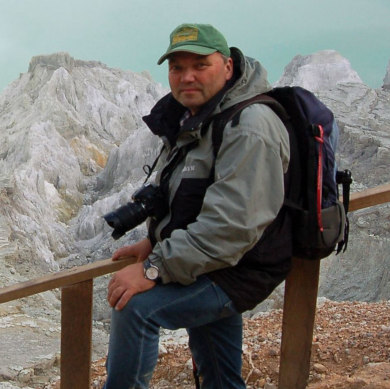
Marek Awdankiewicz
Marek Awdankiewicz is a geologist specialised in studies of volcanic rocks in ancient successions. He carried out research mainly in the Sudetes in the eastern part of the Variscan Belt, working on metabasites and other Lower Palaeozoic metavolcanic rocks, Permo-Carboniferous lamprophyres, trachyandesites, rhyolites and rhyolitic tuffs, as well as Cenozoic basalts. Using the results of field work, petrographic and mineralogical methods, geochemistry and isotope geochemistry as well as U-Pb zircon dating he tries to reconstruct the evolution of ancient volcanic systems: the timing of volcanism, the origin and differentiation of magma and the emplacement and eruptive processes of the volcanic and subvolcanic rocks, in the context of tectonic and environmental setting. The planned keynote lecture will provide an overview of Permo-Carbonifeorus volcanism in the Sudetes area.
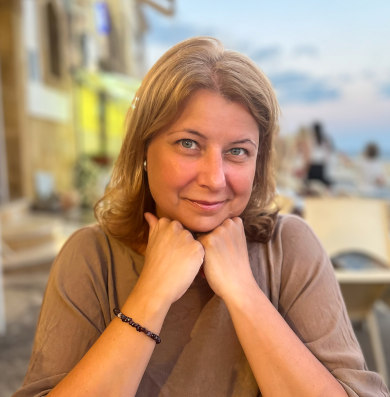
Réka Lukács
Réka Lukács is a geologist specializing in magma reservoir processes and silicic volcanism, with a focus on the Carpathian–Pannonian Region. Her research primarily employs zircon petrochronology as a key tool to constrain eruption timing, magma evolution, and reservoir characteristics. She has produced the first high-precision zircon U–Pb ages for the large-volume Miocene silicic volcanism in the region, significantly refining its chronostratigraphy and revealing the areal extent and impact of these eruptions. Her work integrates geochemistry, stratigraphy, and geodynamics to reconstruct eruption histories and magma system evolution. Another major focus of her research is the Ciomadul volcanic complex, the youngest volcano of the Carpathian–Pannonian region, where she investigates the longevity of the magma storage, melt evolution, and the causes of variations in eruptive behaviour using zircon and apatite crystal records. Her current projects provide unique access to subsurface volcanic records through drill cores, enabling the reconstruction of previously hidden volcanic histories in the Pannonian Basin and offering new insights into the evolution of continental magmatic systems.
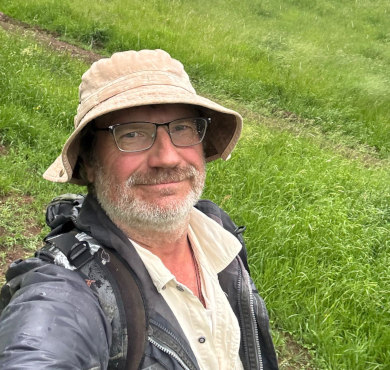
Michael S. Petronis
Michael S. Petronis is a geologist who applies paleomagnetic, rock magnetic, and anisotropy of magnetic susceptibility methods to volcanic and tectonic problems. In rhyolitic volcanic systems, his research investigates deposition and emplacement processes, the magnetic mineral phases that carry remanence and define magnetic fabrics, and vertical variations in Fe–Ti oxide (magnetite) phases within volcanic deposits. His studies in the western USA, Scotland, the Bohemian Massif of Central Europe, and volcanic provinces of France have provided important insights into ignimbrite emplacement, magma flow fabrics, caldera evolution, and post-emplacement deformation in silicic volcanic terrains. His keynote presentation will explore how rhyolites preserve magnetic signals carried by the titanomagnetite phases, and how magnetic remanence and anisotropy of magnetic susceptibility fabrics record the processes of emplacement, flow, and deformation in silicic volcanic systems.
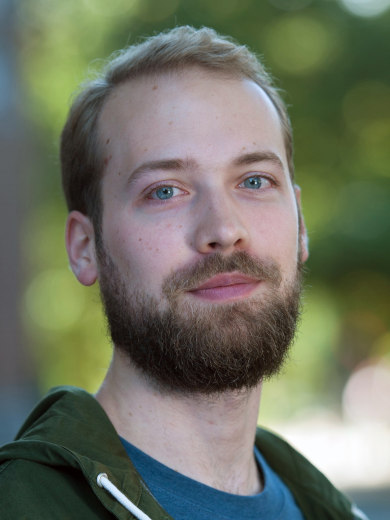
Dawid Szymanowski
Dawid Szymanowski is a geologist specialising in high-precision U-Pb geochronology, which is excellent at providing temporal constraints to a variety of processes in the magmatic, tectonic, and sedimentary realm and across geological time. His recent research has focussed on silicic magmatism, the timing of magmatic-hydrothermal ore-forming processes, of large igneous province emplacement and the related climate change, through to the early formation histories of the Moon and Vesta. Common to many of these problems is the underlying understanding of the fate of zircon in magma, and how it can be exploited to track the internal dynamics of a magma system and to improve geochronology itself. His talk will explore zircon as an archive for silicic magma, how this mineral can be analysed to obtain useful information, and what zircon age spectra can tell us about the underlying magma system.
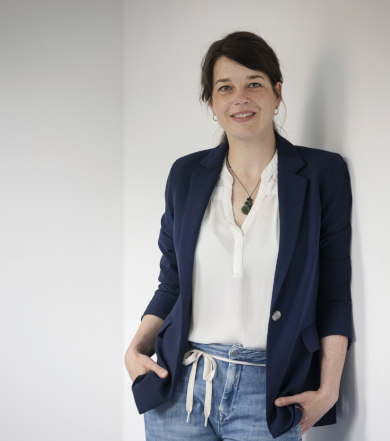
Juliana Troch
Juliana Troch is a petrologist, geochemist, and volcanologist whose research investigates the role of water and other volatile components in controlling the evolution of silicic magmatic systems. She combines field studies, microanalytical techniques, high-temperature and high-pressure experiments, and numerical modelling to examine how volatiles influence magma storage, differentiation, eruption dynamics, crustal assimilation, and ore-forming processes. Her studies of silicic volcanic systems in Yellowstone, Iceland, and other volcanic regions have provided insights into the behaviour of water, CO2, lithium, halogens, and other volatile elements in magma reservoirs. This research has shown how water can limit crustal assimilation, how CO2 affects magmatic systems without necessarily enhancing eruptivity, and how evolved silicic reservoirs can develop chemically enriched domains comparable to those associated with lithium- and rare-earth-element mineralization, advancing our understanding of the transition from magmatic to hydrothermal conditions in rhyolitic systems. Her keynote presentation will explore how volatiles govern the evolution of rhyolitic magmatic systems and their role in linking volcanic processes with the formation of critical mineral resources.
Photo credit: Bettina Engel-Albustin 2025, Foto Agentur Ruhr.
Sponsors & Partners
General sponsor:

This project is funded by the state budget under the “Science Vectors” Programme (Program Wektory Nauki), as awarded by the Minister of Science and Higher Education (Project no. WNK/SP/0274/2025/01). Funding amount: 71 500 PLN. Total cost 210 000 PLN.
Official sponsors:

Partners:


Awards
The Bureau Veritas Polska patronage over the Prof. Ryszard Kryza Prize for students and PhD students in the field of petrology, mineralogy and geochemistry.
The Prof. The Ryszard Kryza Prize for young researchers in petrology, mineralogy, and geochemistry is a tribute to the outstanding geologist and science enthusiast Professor Ryszard Kryza – a great authority in the field of Earth sciences, author and co-author of over 400 scientific publications, one of the top most frequently cited Polish geologists. The Bureau Veritas Mineral Laboratories in Poland proudly announces its patronage of the prestigious competition for young researchers and the Prof. Ryszard Kryza award:
“We are happy to combine our services with the aspiration of exploring new perspectives and developing young talents. The figure of the eminent geologist continues to inspire the exploration of the mysteries hidden deep within the Earth. We are pleased to fund two grants worth PLN 6,000 each for the best student oral presentation and the best student poster that will cover geochemical analyses of rocks, soils, and sediments conducted by our laboratory in Kraków. With these awards we would liked to honor the great scientist’s legacy and promote research and development in the field of mineralogy.”WHO IS ELIGIBLE: students and PhD candidates before their PhD defence.
Commitees & Contact
Organising committee
Co-Chairs of the Organizing committee- Elżbieta SŁODCZYK, PhD (University of Wrocław, Poland)
- Magdalena PAŃCZYK, PhD (Polish Geological Institute – NRI, Poland)
- Anna PIETRANIK, PhD (University of Wrocław, Poland)
- Marek AWDANKIEWICZ, PhD (University of Wrocław, Poland)
- Jakub BAZARNIK, PhD (Polish Geological Institute – NRI, Poland)
- Monika CYRKLEWICZ (Polish Geological Institute – NRI, Poland)
- Christian GEORGEON (Polish Geological Institute – NRI, Poland)
- Dagmara MAGOCH (University of Wrocław, Poland)
- Alexander REPSTOCK, PhD (Saxon State Office for Environment, Agriculture and Geology, Germany)
- Paulina TARKA (University of Wrocław, Poland)
- Kinga ZIMERMAN (Polish Geological Institute – NRI, Poland)
Scientific committee
- Prof. Bogusław BAGIŃSKI (University of Warsaw, Poland)
- Prof. Agnieszka GAŁUSZKA (Jan Kochanowski University of Kielce, Poland)
- Prof. Janusz JANECZEK (University of Silesia, Poland)
- Prof. Monika KUSIAK (Institute of Geophysics, Polish Academy of Sciences, Poland)
- Prof. Jarosław MAJKA (Uppsala University, Sweden; AGH University of Krakow, Poland)
- Prof. Stanisław MIKULSKI (Polish Geological Institute – NRI, Poland)
- Prof. Andrzej MUSZYŃSKI (Adam Mickiewicz University, Poland)
- Prof. Jacek PUZIEWICZ (University of Wrocław, Poland)
- Prof. Ewa SŁABY (Institute of Geological Sciences, Polish Academy of Science, Poland)